
An 80-Year Long October
- ISYPO Media

- Oct 11, 2025
- 3 min read
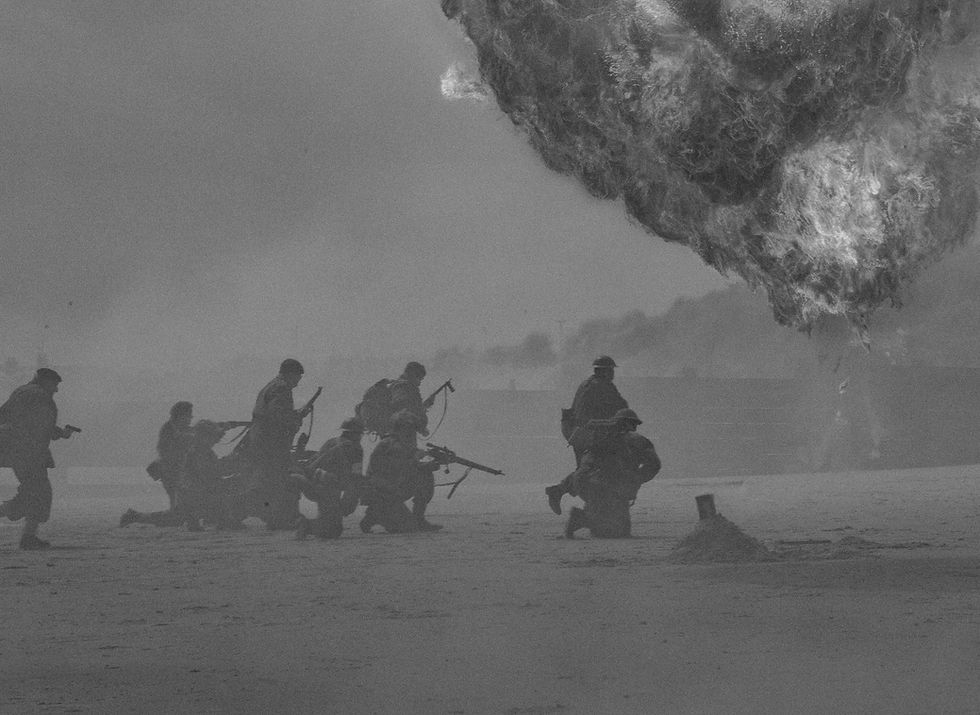
October often plays the role of “the hinge month” in history—a moment when inertia gives way to direction, when deferred decisions become irreversible acts, when the strange mix of harvest season and encroaching cold mirrors political decay and renewal. In 1944, for example, Allied forces captured the German city of Aachen on October 21, marking the first major German city to fall. On October 24, the largest naval battle in history, the Battle of Leyte Gulf, kicked off in the Pacific, sinking the Japanese battleship Musashi. These milestones underscore how October became the month in which momentum shifted decisively in the second world war.
What makes this relevant now is less about the specific military events of seventy-eight years ago and more about how October serves as a metaphor for change. Consider how many political systems, economies, even social movements approximate the season: slow growth, before the leaves fall; latent forces, before winter sets in. Leadership decisions happen in this interval: budgets are approved, alliances forged or broken, public mood hardens.
This October, many contemporary global issues echo that historical rhythm. For instance, the announcement by Taiwan and China of commemorative activities around October 25 marking the 80-year anniversary of Taiwan’s recovery from Japanese occupation is more than symbolic. It is a reminder that history’s long arcs sometimes converge in this month of threshold. There is something deeper: October is when the unseen becomes seen. Contracts signed in summer begin to be implemented; leadership transitions concluded in spring face their first test; neglected problems multiply in visibility. For democracies especially, it can be an early test of stamina. The war-time examples show how long-term campaigns often hit their pivot in October.
For modern politics, we should ask ourselves: Are we approaching an “October moment” now? Are the structures we’ve tolerated in idle months about to face scrutiny? For example: economic inequality, climate policy delays, governance deficits—they may linger under the radar during summer, but by late-October public tolerance reaches a threshold. When those thresholds are crossed, the change often comes swiftly—or violently.
This is why October matters more than we often admit. It is not simply the tenth month; it is a threshold. The lessons from WWII remind us that pivot points don’t announce themselves. The Battle of Leyte Gulf didn’t begin with fanfare—it emerged after months of stasis. But once launched, the effects reverberated. The same could happen in governance, climate action, or global realignment. If we treat October only as a “fall month,” we miss the signal. Instead, we should see it as one of the few windows each year where inertia can break open into action. Those preparing for change, reform, activism, or protection may do well to use this month as their moment of focus—not because of the calendar, but because history suggests the timing is ripe.
The takeaway: we are living in a world full of “scheduled” calendar transitions—budget years, election cycles, treaty signatures—but the real transition often creeps up in October. So watch this month. Not because something dramatic must happen, but because when momentum builds, October is often the month it breaks.
Whether you’re a citizen, activist, policymaker or observer, remember: the harvest is in, the leaves are falling—and the time to act might just be now.
Igor Vantafka, Member of Media Study & Tech. Influence Focus Group @ ISYPO



Comments